
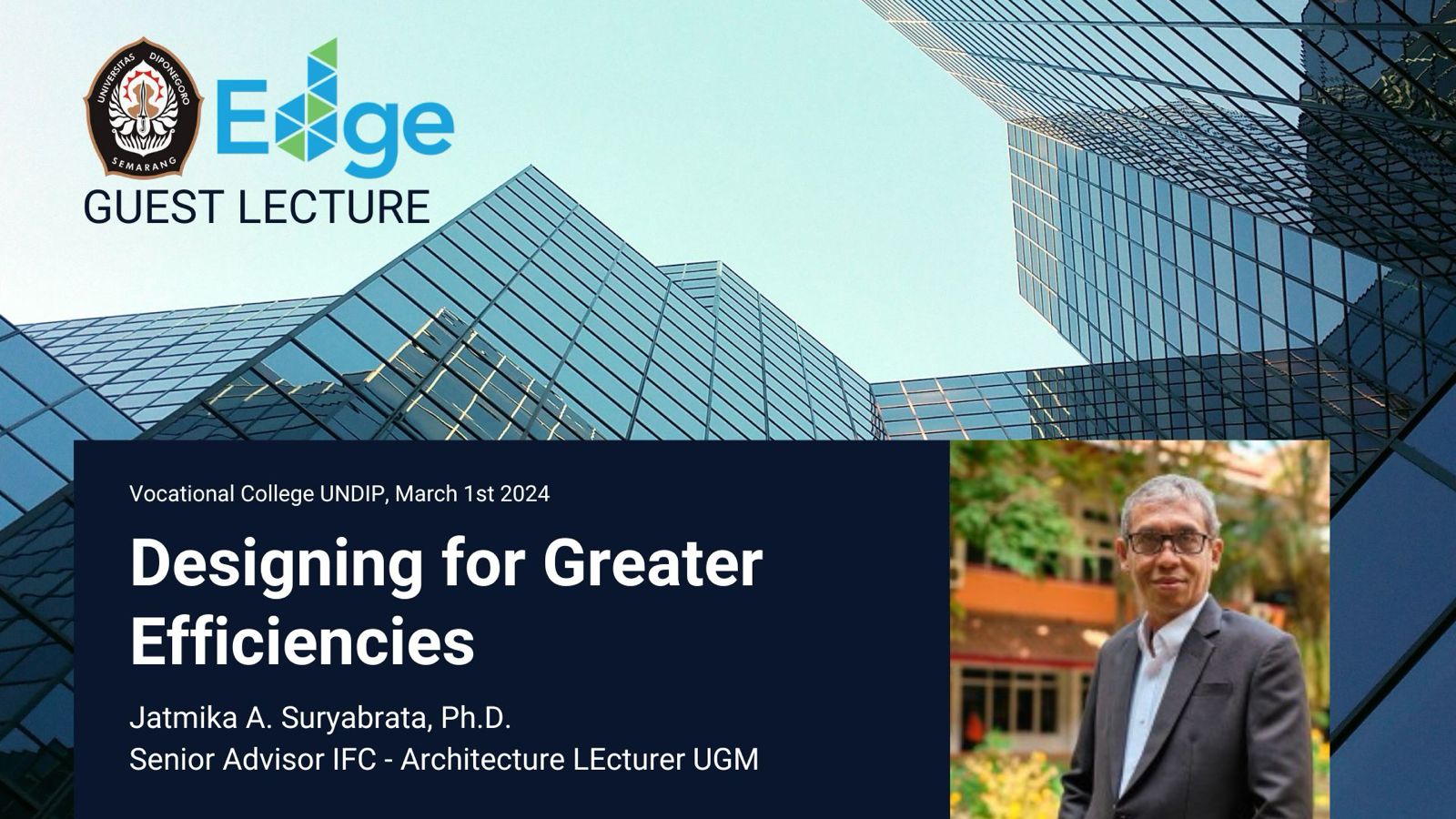
March 1, 2024, Located in the 4th Floor Meeting Room, the Infrastructure Engineering and Architectural Design Study Program has held a guest lecture with the theme “Designing for Greater Efficiencies.” This guest lecture presented speakers who are experts in architecture, namely Jatmika A. Suryabrata, P.hD. / Senior Adviser IFC, Architecture Lecturer of UGM. Mr/Mrs also attended this guest lecture activity. Lecturers and students of the Pillars Study Program concentrating on Building Architecture.
Delivering a guest lecture with the theme “Designing for Greater Efficiencies” is essential. Designing for greater efficiency refers to planning and developing systems, products, or methods to increase efficiency in the use of resources. Efficiency can be measured in various ways, including energy, raw material, time, cost, or labor.
In a more general context, designing for greater efficiency involves identifying and implementing changes or improvements that can reduce waste, increase productivity, or optimize the use of resources. Some steps you can take to design for greater efficiency include:
1. Process analysis: Conduct an in-depth analysis of existing processes to identify areas that require improvement or change. This may involve identifying unnecessary steps, duplication of work, or inefficient use of resources.
2. Use of more efficient technology: Using technology or equipment that uses energy or other resources. For example, we are replacing older equipment with more energy-efficient equipment or using automation systems to reduce labor requirements.
3. Supply chain optimization: Analyze and optimize the supply chain to reduce wasted time and costs in the production and distribution process. This may involve reducing inventory, improving supplier coordination, or shortening production cycle times.
4. Improved product design: Designing products by considering efficiency in resource use. This may involve selecting more efficient materials, lighter designs, or reducing the required components.
Employee training and development: Developing employee skills and knowledge in efficiency, including more efficient use of equipment and work procedures.
Waste management and recycling: Implement efficient practices and encourage recycling to reduce waste and maximize resource use.
Designing for greater efficiency is a holistic approach involving multiple business and technical aspects. This can help Stakeholders reduce production costs, increase productivity, reduce environmental impacts, and increase competitiveness in the market.